 Back
Back
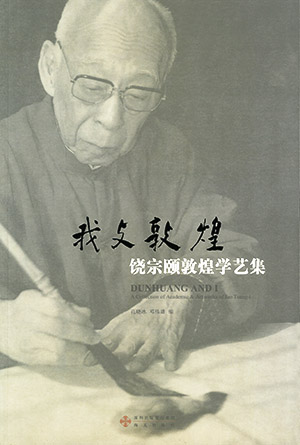
Year: 2009
Editor: Dr Tang Wai Hung
Press: 海天出版社;深圳
Preface:Dunhuang and I
by Jao Tsung-i
I always believe that the excavated manuscripts from Dunhuang caves only play a role as supplemental materials in history, and I didn’t compare and study those materials thoroughly. On the one hand, it was because of my time limitation; while on the other, there was ample information available, such as the library systems in the Britain and France, they contain detailed records on this subject. Thus it was not necessary to do duplicate work. I employed comprehensive research approach and used these materials information as supporting historical information, indicating its crucial linkage to a particular issue in history. This is how my research manner is different from others.
The art forms of Dunhuang, particularly murals, is my favourite. In view of the fact that I used to live abroad for a long time, I was not able to conduct in-depth research on this subject. Therefore, I emphasised the studies of the line drawings and calligraphy unearthed. I undertook the research on sketches on the backside of the manuscripts as well as calligraphy. I was deeply aware of the lack of authentic paintings of the Tang dynasty because those so-called works by Wu Daozi and Wang Wei were actually imitations by painters in the later periods. In 1964, I started my work at The National Center for Scientific Research (Centre national de la recherche scientifique, CNRS) and proposed two projects to Mr. Paul Demiéville, one of them was Dunhuang sketch, and later it was published as Peintures Monochromes de Dunhuang by École Pratique des Hautes Études (EPHE) in Paris.
In respect of calligraphy, after examining the microfilms of Dunhuang manuscripts taken to the Britain by Marc Aurel Stein, I immediately wrote an essay ‘A Study of Calligraphy on Dunhuang Manuscripts’, appended with ‘Calligraphy on Dunhuang Manuscripts’. This essay is included in Journal of Oriental Studies, Volume 5, published in 1961. During my stay in France, I went to the Department of Oriental Manuscripts of the National Library of France (Bibliothèque nationale de France, BnF) everyday to carefully study Dunhuang manuscripts, including Golden Light Sutra done in the 5th year of Emperor Huangxing of Northern Wei, and the stone rubbing of Hot Spring Inscription by Emperor Taizong of Tang. In 1980, I lectured in Kyoto, Japan. During that period of time, I was invited to be the chief editor of Calligraphy of Chinese Documents Excavated in Dunhuang by P. Pelliot by Nigensha Publishing Corporation; later this publication was compiled and published with the title of Selected Dunhuang Calligraphy Collections in France.
In a narrow sense, ‘Dunhuang Studies’ refers to the study on statues, murals, and manuscripts from the Mogao Grottoes. Broadly speaking, however, Dunhuang Studies should contain the research of Han wooden slips excavated in the area, such as the Jin pottery unearthed in Qijiawan and the Buddhist manuscripts excavated in Turfan. That is to say, in a board sense, researchers of Dunhuang Studies should not study merely materials unearthed in the Mogao Grottoes.
This article is excerpted from ‘Dunhuang Studies and I’, recorded in The Collected Works of Jao Tsung-I in the 20th Century, Vol. 8 (I), Pgs. 291-299. Published by Shin Wen-Feng Print Corporation.